How to Remove Tonneau Cover Rails in 10 Easy Steps
Removing tonneau cover rails can be tricky, especially if you’re not sure where to start. Many truck owners struggle with this task, worried about damaging their bed or making the process more complicated than it needs to be. But don’t worry—you’re not alone, and with the right steps, it’s definitely doable.
To remove tonneau cover rails in 10 simple steps, start by gathering the right tools like a plastic trim removal tool, impact drill, and lubricant. Carefully spray bolts with WD-40, then pry off clips and remove side rail bolts gradually, making certain you don’t damage the bed.
Support the cover as you lift it off, and cap any drilled holes. For detailed guidance on each step, keep exploring to guarantee a smooth and safe removal process.
Key Takeaways
- Gather all the tools you’ll need, like trim removal tools, an impact drill, and some lubricant before you start.
- Carefully pry off any plastic caps and then loosen the bolts or clamps that are holding the rails in place.
- If you come across rusted or stuck fasteners, spray them with penetrating oil to make the removal easier.
- Next, remove the side rails and supports by sliding or lifting them off, depending on the type of cover you have.
- Once everything is taken out, clean all the components and inspect them for any damage.
- Store all parts safely so you can reassemble the cover later or perform maintenance when needed.
Why Should You Remove Your Tonneau Cover?
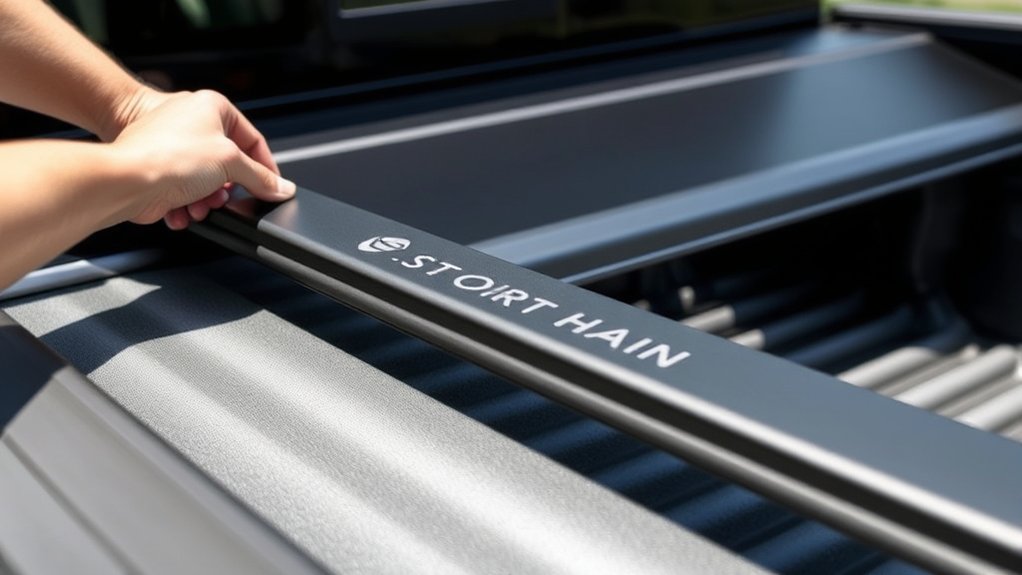
Removing your tonneau cover rails can make it much easier to access your truck bed for maintenance, repairs, or upgrades. When you take out the bed rails, you get a clearer view of the entire bed area and easier entry.
It’s also a good chance to check the rails and drainage channels for any damage or debris. This helps prevent rust and corrosion from weather exposure or dirt buildup.
Plus, removing the tonneau cover can improve aerodynamics and fuel efficiency when you’re not using it. If you’re switching covers or replacing worn or damaged rails, removal is necessary.
And without the rails, cleaning and maintaining your truck bed becomes much simpler. It helps keep your truck in good condition and ready for any hauling needs.
Preparing for Tonneau Cover Removal: Tools and Safety Tips
Before you start removing your tonneau cover rails, it’s important to gather the right tools and follow safety precautions to make the process smooth and safe. Essential tools include a plastic trim removal tool, an impact drill with a hex head bit, and penetrating lubricant like WD-40.
Wearing safety gloves protects your hands and ensures a firm grip when handling tools and hardware. Begin by inspecting the bed rails for plastic caps held by molded clips, and gently pry them off with the trim removal tool to prevent breakage.
Apply penetrating oil to stubborn bolts and screws, and wait 10-15 minutes for it to loosen corrosion. Always disconnect electrical connectors carefully, pressing release tabs and avoiding direct wire pulls to prevent damage.
How to Identify Your Tonneau Cover Type Before Starting
Before removing your tonneau cover, you should identify its type by looking at the material and design.
Check how it’s fastened—whether with Velcro, hooks, bolts, or clamps—as this will influence the removal process.
Also, look for hinges, supports, or electrical parts that can help you figure out if it’s a soft cover, folding, retractable, or a hard cover.
Cover Material and Design
Have you ever wondered how to confidently identify your tonneau cover type before trying to remove it? Start by checking out the material and design.
Soft covers usually feature fabric or vinyl and often roll up or fold, making them easy to spot. Hard covers are made from fiberglass, aluminum, or composite materials, giving them a solid, rigid feel.
Take a close look at the side rails. If you see hinges, support bars, or locking mechanisms, your cover might be foldable or retractable.
Clamps or quick-release latches are also visual clues that can help you figure out the style.
Finally, checking the manufacturer’s model number or product label can give you precise details.
Knowing these details helps you plan the removal process smoothly and avoid any damage.
Fastening and Mounting Method
To accurately identify your tonneau cover’s fastening and mounting method, start by inspecting how it attaches to the truck bed. Look for mounting bolts along the bed rails, which indicate a hard or retractable cover secured with bolts or fasteners.
Check for clamps, hooks, or straps if the cover is soft or folding, as these are common fasteners. Soft roll-up covers typically slide into grooves and are secured with straps or Velcro, while hard covers often bolt directly to bed rails.
Retractable covers usually have side latches and a canister, signaling a different mounting system. Refer to the manufacturer’s manual or model-specific features to confirm your cover type before removal.
Clear identification guarantees a smooth, safe removal process.
Step-by-Step: Removing Soft Roll-Up and Folding Covers
To remove soft roll-up or folding covers, start by unrolling or folding the cover and disconnecting any securing straps or clips.
Next, loosen and take out the side clamps or brackets holding it in place, using the right tools.
Finally, lift the cover off carefully, store it safely, and reassemble everything in reverse when you’re ready to reinstall.
Prepare Cover and Tools
Before trying to remove the tonneau cover rails, you should prepare both the cover and your tools. Start by fully opening or rolling back the soft or folding cover to get access to the bed rails and mounting points.
Next, use a plastic trim removal tool to gently pry off any plastic caps or covers hiding the bolts or clamps on the side rails. Mark the position of clamps or support brackets with a marker or tape to make reinstallation easier later.
Gather the right tools, like a wrench or Allen key, to loosen and remove the clamps or bolts holding the cover in place. Carefully lift the cover panels or rolled-up soft cover off the bed, supporting them if they’re heavy.
Proper preparation helps ensure the removal process goes smoothly.
Remove Clamps and Roll
Start by fully opening your soft roll-up or folding cover and unfastening any securing straps, snaps, or Velcro strips. This gives you better access to the clamps holding the cover in place.
Loosen the clamps by carefully removing hooks, snaps, or Velcro strips, keeping all fasteners organized for reinstallation later. Gently roll or fold the cover back toward the cab, supporting it to prevent sagging or damage during removal.
Use gloves to grip the cover securely, then carefully lift and slide the clamps or hooks off the bed rails. Take your time to avoid bending or scratching the surface.
Once the cover is fully detached, store it in a safe, cushioned area to prevent damage. Also, clean the bed rails and clamps for future use or storage.
Store and Finalize
Wondering how to properly store and finalize your soft roll-up or folding cover after removal? Start by carefully rolling or folding the cover and securing it with straps to prevent it from unrolling.
Use a plastic trim removal tool to gently pry off the plastic caps covering the bed rails, beginning from the rear. Remove any clamps or support bars, making sure to note their original positions for easy reinstallation later.
Store the rolled or folded cover in a padded, indoor location to prevent damage. Keep all hardware organized and stored together for future use.
Double-check that all fasteners and clips are secured, and make sure the bed rails are clean and free of debris before completing the process. Proper storage guarantees the cover’s longevity and makes reinstallation easier.
How to Remove Retractable and Hard One-Piece Covers Safely
Removing retractable and hard one-piece tonneau covers safely requires some planning to avoid damage and stay safe.
To remove a retractable cover, start by releasing the side latches, then loosen the bolts, and carefully slide the cover forward. Make sure the drainage channels are clear before moving it.
Release side latches, loosen bolts, and slide the cover forward carefully. Ensure drainage channels are clear first.
For hard one-piece covers, open the tailgate first. Detach the hinge bolts with the correct socket size, and lift the cover straight up. It’s best to get help to prevent bending or damage.
Always disconnect electrical wiring and drain tubes beforehand to avoid water damage and ensure safety. Use the right tools, like impact drills with hex bits, and spray stubborn bolts with WD-40 to make removal easier.
Support the cover when lifting to prevent scratches, bending, or injury—especially if it’s heavy or bulky. Taking these steps will help you remove your tonneau cover safely and smoothly.
How to Remove Bed Rails Without Damage
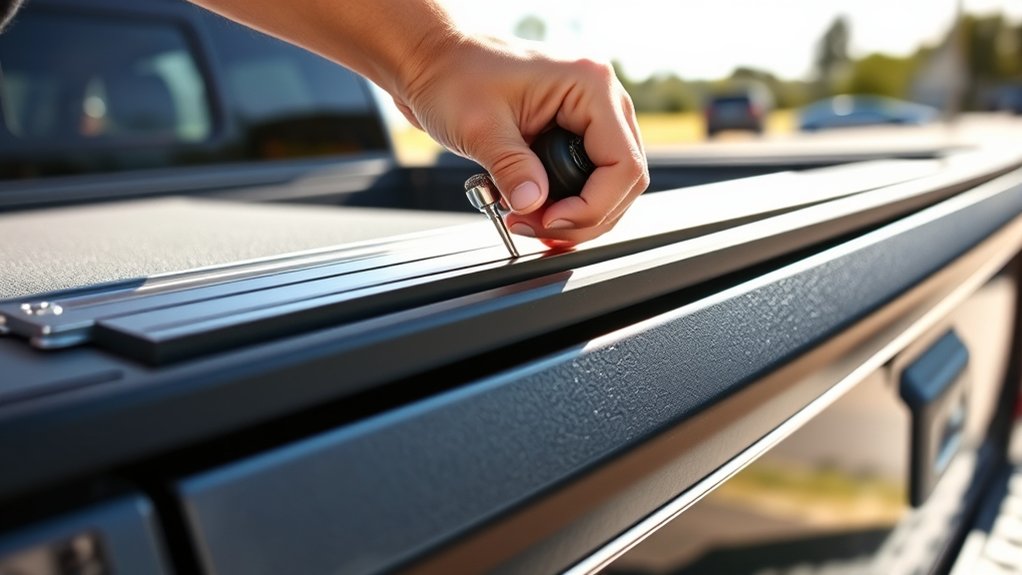
To remove bed rails without causing damage, start by gently prying under the bed rail caps with a plastic trim removal tool. These caps are held in place by molded clips, so using gentle leverage helps prevent breaking or damaging them.
Begin at the rear of the truck bed and work your way forward, applying gentle pressure to release the clips without bending the rails. Before you detach the rails, take out any rubber plugs at the bed corners to avoid fitment issues later on.
Once the rails are removed, check the bed surface for debris or residue. Clean the area with alcohol or a gentle solvent to prepare it for reassembly. To finish up, cap any drilled holes with rubber plugs to keep water out and prevent rust, helping your truck stay protected.
Removing Side Rail Bolts: Tools, Techniques, and Common Challenges
When tackling side rail bolts, choosing the right tools and techniques can make everything much easier and help prevent damage.
For bolts secured with Allen keys, using an impact drill with a hex head bit can speed things up and reduce the effort needed.
Before trying to loosen corroded or stuck bolts, spray them with lubricant like WD-40. This helps loosen rust and corrosion, making removal smoother.
Use the correct size Allen wrench carefully so you don’t strip the bolt head or damage the fastener.
Keep in mind that rust or corrosion might require extra force or different tools, like a breaker bar.
Once you’ve removed the bolts, check both them and the side rails for any damage.
Be sure to store all fasteners safely so you can reuse them later.
Using proper tools and techniques makes the removal process much easier and more successful.
Tips for Disassembling Factory Tonneau Covers Properly
To disassemble factory tonneau covers properly, start by using a plastic trim removal tool to gently pry off plastic caps and clips.
Make sure to apply proper technique and avoid forcing parts, which can cause damage.
Using the right tools and careful prying will help keep your truck bed and cover components intact.
Gentle Prying Techniques
Approaching the disassembly of factory tonneau cover rails with gentle prying techniques helps prevent damage and guarantees a smooth process. Use a plastic trim removal tool to carefully pry under the clips or caps, avoiding scratches and breakage.
Apply steady, even pressure around the edges of the plastic caps or clips to release them gradually, rather than forcing them off. Start from the rear of the truck bed and work forward, removing one clip or cap at a time to stay in control and reduce stress on the parts.
For molded clips or covers, steer clear of metal tools that could gouge the plastic. Instead, choose non-marring tools designed for trim removal to ensure a safe, damage-free disassembly.
Proper Tool Usage
Using the right tools is essential for disassembling factory tonneau cover rails effectively and without damage. Start by selecting the correct size hex wrench or Allen key to avoid stripping bolts. Apply penetrating lubricant like WD-40 to any stuck or corroded bolts to make removal easier.
For faster disassembly, carefully use an impact drill with hex head bits. Be cautious not to over-tighten or damage the fasteners. Always loosen clamps gradually and evenly to prevent bending or damaging the bed rails.
Keep these tips in mind:
- Use the appropriate size hex wrench for each bolt
- Apply penetrating lubricant before attempting bolt removal
- Operate impact drill with care to avoid stripping or damage
Following these steps will help you disassemble everything smoothly and without causing damage.
Post-Removal Care: Cleaning, Inspecting, and Storing Components
After removing the tonneau cover rails, it’s important to give them a good cleaning to avoid future problems. Use soap and water to wash away dirt, debris, and any leftover adhesive or sealant from the bed rails and clamps.
Once they’re clean, check the rails and fasteners for rust, corrosion, or damage. Fix any issues before putting everything back or storing it.
To keep the parts in good shape, store the rails in a padded, dry container or wrap them in protective material. This helps prevent scratches or deformation.
Lubricate the clamps and sliding parts with a silicone-based spray. It’ll help them move smoothly when you reattach everything.
Finally, keep all hardware and fasteners in labeled bags or containers. Store these in a cool, dry place away from sunlight to prevent damage.
When to Call a Professional for Help With Tonneau Cover Removal
If you encounter rust, corrosion, or stubborn parts that refuse to budge during removal, it’s best to call in a professional. Rust or corrosion can weaken the structure, risking damage if you force the process. Heavy or complex covers requiring specialized tools should be handled by experts to ensure safe disassembly.
Seek professional help for rusted, fragile, or complex components to ensure safe and damage-free removal.
Electrical components or wiring that are difficult to disconnect can easily be damaged, so professional help is recommended to prevent costly repairs. Covers with embedded locking mechanisms or security features also need careful removal to avoid harm.
You should consider professional help if:
- The rails are seized due to rust or corrosion
- Electrical components are involved and hard to disconnect
- The cover is old, fragile, or heavily damaged
Frequently Asked Questions
How to Take Tonneau Cover Rails Off?
To take the tonneau cover rails off, start by removing any plastic caps or rubber plugs at the bed corners. Use an impact drill with a hex head bit to loosen and remove the side rail bolts.
If the bolts are stuck, spray them with penetrating oil like WD-40 and wait a few minutes. Carefully lift the rails away from the bed, supporting them to prevent damage.
Finally, clean the surface and cap any remaining holes.
What Are T Slot Rails on a Tonneau Cover?
T-slot rails on a tonneau cover are like the Swiss Army knives of truck accessories. They’re specialized mounting tracks that run along the cover’s sides and have grooves for T-shaped bolts.
You can slide and reposition accessories without any tools, making your setup super flexible. Made from durable materials like aluminum or plastic, they’re designed for easy adjustments.
This allows you to customize your cargo or add new features effortlessly.
Can I Go Through a Car Wash With a Tonneau Cover on My Truck?
You can go through a car wash with your tonneau cover on, but it really depends on what kind you have. Soft or roll-up covers usually handle automatic washes pretty well.
Hard or retractable covers might need to be secured or even removed to avoid damage from high-pressure water or brushes. Always check your cover’s manufacturer guidelines before heading in.
For safety, it’s best to choose a touchless or hand wash whenever possible. Afterward, give your cover a quick inspection to keep it in good shape.
How to Disassemble a Tonneau Cover?
To disassemble a tonneau cover, start by removing any plastic caps or covers on the bed rails using a plastic trim tool.
Next, grab a socket wrench or Allen key to loosen and take out the bolts holding the cover in place.
Carefully detach clips, pins, and support brackets, making sure to note where each piece goes.
If your cover has electrical wiring or drainage components, disconnect those as well.
Support the cover’s weight during removal to prevent it from falling or getting damaged.
Finally, store all parts safely so you can easily reassemble everything later.
Conclusion
Removing your tonneau cover rails is like carefully guiding a sailboat into harbor—taking small, deliberate steps ensures a smooth process. With patience and the right tools, you’ll be able to clear the deck and get ready for what’s next.
Think of it as trimming the sails before a journey. Once you’ve removed the rails, you’ll have a clean, open space to work with or customize as you wish. It’s all about preparing for your next adventure.
Trust the process and take your time. Removing tonneau cover rails might seem tricky at first, but with a little patience, you’ll enjoy the calm after the storm.