How Long Can You Drive With Bad Spark Plugs?
If you’re like many drivers, dealing with engine issues can be stressful and confusing. One common concern is knowing how long you can drive with bad spark plugs before causing serious damage. You’re not alone—many people struggle with when to fix this problem and how it affects their vehicle’s performance.
You can usually drive a short distance with bad spark plugs, but it’s risky. Mild misfires might let you go about 30 to 50 miles, but severe issues can cause engine damage within just a few miles. Ignoring the signs can lead to rough running, increased fuel use, and costly repairs.
If you want to understand how long you can safely drive and what precautions to take, keep exploring the signs and solutions.
Key Takeaways
– Mild misfires might let you drive for about 30-50 miles before risking serious engine damage.
It’s not ideal, but you could get some extra miles if you’re cautious.
Severe misfires, on the other hand, can cause engine failure in just a few miles.
That’s a big red flag—don’t ignore it.
If you need to drive, keep your speed under 50 MPH.
Driving slowly can help reduce stress on your engine temporarily.
But remember, ignoring the symptoms only makes things worse.
It increases the risk of costly repairs and long-term engine damage.
Getting your spark plugs fixed promptly is super important.
It helps prevent damage to pistons, the catalytic converter, and other internal parts.
What Are the Warning Signs of Failing Spark Plugs?
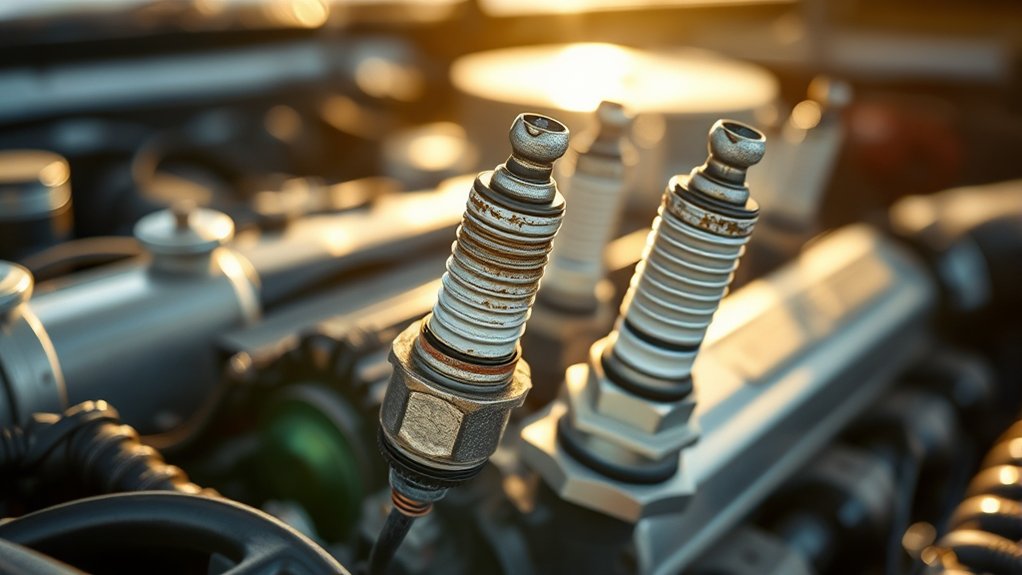
Failing spark plugs often give clear signals that something’s wrong under the hood. You might see the check engine light flickering or staying steady, which points to ignition issues.
Failing spark plugs often trigger check engine lights and ignition problems.
Rough idling is another common sign, where your engine feels shaky or uneven when it’s just idling. You might also notice engine misfires, causing sudden hesitations or jerks during acceleration.
A drop in fuel efficiency is also a clue, since incomplete combustion wastes more fuel. Starting your car can become tougher, especially in cold weather, needing longer cranking times.
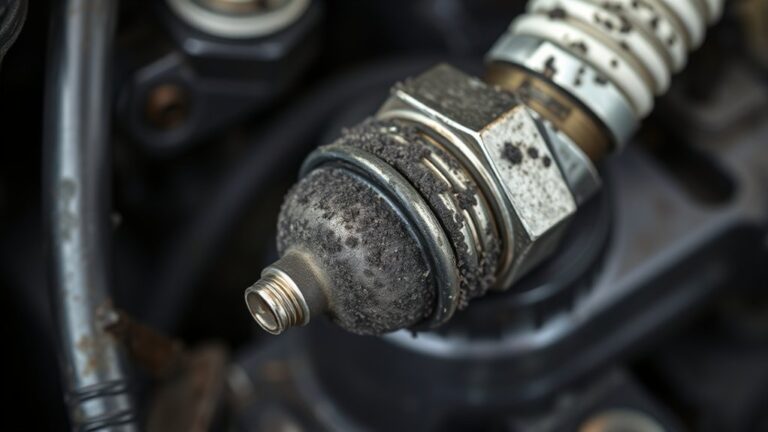
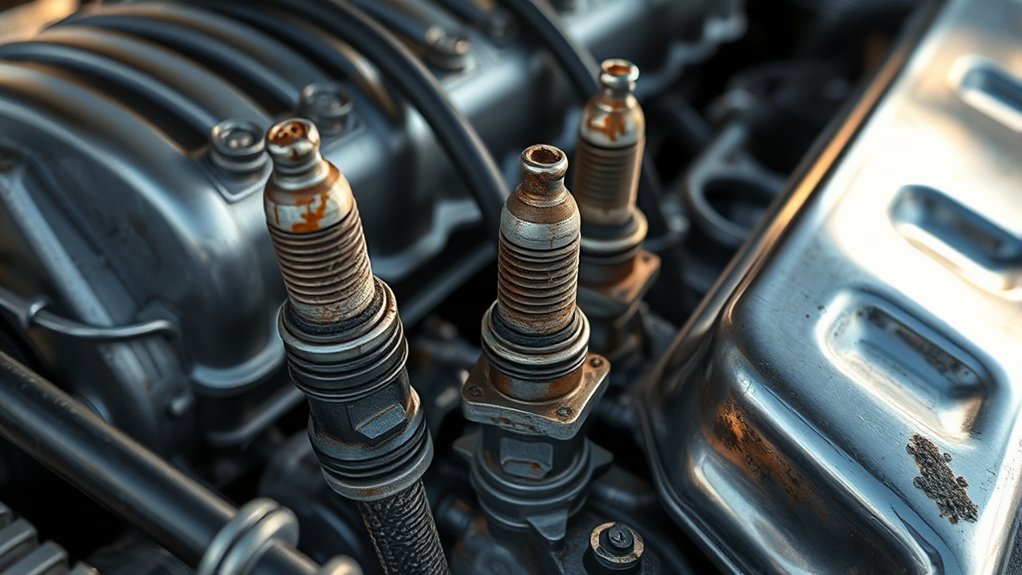
Visual signs like worn electrodes, heavy deposits, or cracked ceramic insulators on the spark plugs are clear indicators they need replacing. Spotting these warning signs early can help you avoid more serious engine damage.
How Long Is It Safe to Drive on a Bad Spark Plug?
Driving on a bad spark plug can be risky, but how long you can do it depends on how badly the plug is misfiring and your engine’s overall condition.
Mild issues might let you go 30 to 50 miles, but severe misfires can cause quick, costly damage within just a few miles.
To avoid serious engine problems, it’s best to get repairs as soon as you notice any spark plug trouble.
Severity of Misfire
The safety of continuing to drive with a bad spark plug mostly depends on how severely it misfires. Mild misfires might let you drive a few miles, but the risk of engine damage increases over time.
As misfires get more serious, they can cause quick damage to engine parts, making it unsafe to keep driving after just a short distance. The severity of the misfire directly affects how long you can safely continue—more serious misfires need immediate attention.
Ignoring severe misfires can lead to costly repairs, like replacing the catalytic converter. To avoid major engine damage, it’s important to fix faulty spark plugs quickly, especially if you notice misfires or they get worse.
The level of misfire severity tells you how fast you should seek repairs.
Vehicle Condition Factors
Your vehicle’s overall condition and how well it’s running play a big role in how long you can safely drive with a bad spark plug. If your spark plugs are causing engine misfires, you might notice rough idling, decreased fuel economy, and even stalling.
Mild misfires may let you drive several miles, but ignoring them can damage parts like the catalytic converter. Severe misfires can cause quick engine damage, meaning you should get repairs within a few miles.
The age of your vehicle, its maintenance history, and how bad the spark plug issue is all affect how long you can keep driving safely. Ignoring these problems can lead to higher fuel use and worse engine performance. It’s best to fix faulty spark plugs promptly to avoid bigger issues.
Risk of Engine Damage
Even a small misfire from a bad spark plug can quickly turn into serious engine damage if you ignore it.
Engine misfires cause rough idling and unburned fuel, which can enter and harm your catalytic converter in just 50-100 miles.
Over time, running on faulty spark plugs increases the risk of damaging important engine parts like pistons and valves.
The longer you drive with a misfiring spark plug, the higher the chance of costly repairs and irreversible damage.
While the safe distance varies depending on how severe the misfire is, even minor issues shouldn’t be ignored.
Fixing spark plug problems quickly helps prevent serious engine damage, keeps your vehicle running smoothly, and saves you money.
What Are the Risks of Driving Long Distances With Worn or Broken Spark Plugs?
Driving long distances with worn or broken spark plugs can seriously damage your engine and exhaust system. Faulty spark plugs lead to engine misfires, which over time can harm pistons and cylinders.
Unburned fuel from these misfires can also enter the exhaust, putting the catalytic converter at risk. Here’s a quick look at the main risks:
| Issue | Consequence | Severity |
|---|---|---|
| Spark plug wear or breakage | More engine misfires | High |
| Unburned fuel | Damage to catalytic converter | Very high |
| Overheating | Internal engine damage | Critical |
Ignoring these problems can lead to costly repairs like ignition system overhauls or even engine replacement. Staying ahead of these issues helps prevent serious damage and keeps your vehicle running smoothly.
How Do Bad Spark Plugs Impact Engine Performance and Fuel Economy?
Worn or faulty spark plugs can significantly reduce your engine’s performance and fuel efficiency. When spark plugs aren’t firing properly, you’ll notice less engine power and sluggish acceleration.
Specifically, incomplete combustion causes rough idling and engine misfires, which harm overall engine performance. Faulty spark plugs also make your engine use more fuel, as it tries to compensate for poor ignition by injecting extra fuel.
Poor ignition allows unburned fuel to enter the exhaust system, further lowering your fuel economy. Over time, these issues can damage parts like the catalytic converter, making your engine less efficient.
Staying on top of spark plug maintenance is key to keeping your engine running smoothly and getting the best fuel economy.
What Happens If You Ignore a Broken or Worn Spark Plug?
Ignoring a broken or worn spark plug can make your engine misfire, run rough, and lose power.
If you keep driving like that, unburned fuel might damage your catalytic converter and cause costly repairs.
Over time, the problem gets worse, risking engine damage and higher fuel costs.
Engine Performance Declines
When a spark plug becomes broken or worn, your engine’s performance drops right away. You’ll notice misfires, which cause rough idling and uneven acceleration. Worn spark plugs lead to incomplete combustion, reducing power and making your fuel last longer.
Ignoring these issues over time can lead to more serious problems like increased emissions and your check engine light coming on. It can also cause damage to other parts of the engine, such as pistons and valves.
If left unchecked, unburned fuel can cause overheating and harm the catalytic converter. These problems not only hurt your engine’s overall performance but can also lead to costly repairs.
As misfires continue, your engine struggles to run smoothly, and your fuel efficiency drops sharply. Addressing spark plug issues early helps keep your engine running reliably and prevents further damage.
Risk of Costly Damage
If you neglect a broken or worn spark plug, unburned fuel can get into the catalytic converter, causing it to overheat and eventually fail. This can lead to costly damage, like needing a new catalytic converter or engine repairs.
Faulty spark plugs also cause continuous misfiring, which increases engine wear and risks damaging pistons, valves, and the ignition system. Driving with bad spark plugs for too long makes your engine run inefficiently, uses more fuel, and can even cause overheating.
Ignoring these issues might trigger the check engine light and make mechanical problems worse. To help visualize, here’s a quick comparison:
| Issue | Potential Damage |
|---|---|
| Spark plug failure | Engine wear, misfiring |
| Unburned fuel entry | Catalytic converter overheating |
| Ignored maintenance | Costly repairs and replacements |
Skipping spark plug maintenance can lead to costly damage—that’s best to avoid.
Practical Tips for Driving Safely With a Spark Plug Issue
Driving with a spark plug issue requires caution to prevent further engine damage. To do so, you should:
- Drive cautiously at speeds around 50 MPH or less to reduce engine stress.
- Keep a close eye on engine performance for misfires or rough idling, and be ready to stop if symptoms get worse.
- Avoid heavy acceleration or towing, as these can make engine problems caused by bad spark plugs worse.
Watch the temperature gauge to prevent overheating, especially during longer drives. If you notice misfires or rough idling, it’s best to limit your driving and plan for a spark plug replacement soon.
Staying attentive helps prevent more serious damage and costly repairs down the line.
When Is It Time to Replace Your Spark Plugs to Prevent Damage?
Knowing the right time to replace your spark plugs can help you avoid costly engine problems later on. Usually, spark plugs should be replaced every 30,000 to 100,000 miles, but this depends on your vehicle and the type of spark plugs you have.
You should consider replacing them if you notice misfiring, rough idling, or reduced fuel efficiency. Visual signs like worn electrodes, heavy deposits, or cracked insulators also mean it’s time for a change.
Ignoring these signs and driving with faulty spark plugs can cause engine damage, including harm to the catalytic converter.
To prevent costly repairs, follow your vehicle’s owner’s manual for recommended replacement intervals and replace your spark plugs when needed before serious engine issues develop.
Should You Try DIY Repairs or Seek Professional Help?
Deciding whether to tackle spark plug replacement yourself or seek professional help depends on your mechanical skills and comfort level with car repairs. If you have basic skills and the right tools, DIY repairs for front spark plugs are doable. However, for rear plugs, professional help is recommended because it often requires specialized tools and expertise. Consider these points:
- Attempt DIY repairs only if you’re confident in your mechanical skills.
- Seek professional help if spark plug issues involve inaccessible or complex areas.
- Keep in mind that incorrect installation can cause engine problems like cross-threading or improper gaps, which may require costly repairs later.
Choosing professional help ensures proper diagnosis, safety, and adherence to manufacturer specifications, reducing the risk of damaging your engine during spark plug replacements.
Frequently Asked Questions
What Can Happen if I Drive With Bad Spark Plugs?
If you drive with bad spark plugs, your engine can misfire, run roughly, and lose power. You might also notice decreased fuel efficiency and increased emissions.
Over time, unburned fuel can damage your catalytic converter, leading to costly repairs. Continuing to drive in this condition raises the risk of engine overheating and more serious mechanical issues.
This could leave you stranded and require extensive repairs. It’s best to get your spark plugs checked and replaced if needed to avoid these problems.
What Kills Spark Plugs Quickly?
A stitch in time saves nine, and ignoring spark plug issues kills them quickly.
You can accelerate wear by using poor-quality fuel, neglecting fouling signs, or running your engine hot because of the wrong heat range.
Frequent aggressive driving, high RPMs, and engine misfires also cause rapid damage.
Basically, pushing your engine beyond its limits and ignoring maintenance speeds up spark plug deterioration.
This can lead to costly repairs. Stay attentive to keep your spark plugs in top shape.
How Long Can You Run a Car With Bad Spark Plugs?
You can run your car with bad spark plugs for a short distance, but how long really depends on how bad the misfire is.
If the misfire is severe, you might cause engine damage in just a few miles. Mild misfires could let you go tens or even hundreds of miles, but it’s pretty risky.
To avoid costly repairs, it’s best to replace or fix your spark plugs as soon as possible.
How Long Do Spark Plugs Last on a Hyundai Elantra?
Spark plugs on your Hyundai Elantra usually last between 30,000 to 100,000 miles, depending on the type and driving conditions.
Iridium and platinum plugs tend to last longer—often up to 100,000 miles—while traditional copper ones may need replacing sooner.
Watch out for signs like rough idling or poor fuel efficiency. Regular maintenance and following the manufacturer’s recommendations help keep your spark plugs in good shape.
Conclusion
Ignoring bad spark plugs can lead to costly engine damage, like a stalled car on a busy highway. Imagine losing control because of delayed maintenance. You’d wish you had acted sooner.
Regular checks and timely replacements keep your engine running smoothly and safely. Don’t wait for a breakdown; prioritize spark plug health today.
Staying proactive guarantees your drives are safe, efficient, and stress-free. Taking care of your spark plugs ensures your engine stays in top shape.