How Bad Spark Plugs Cause Rough Idle and How to Fix It
Many car owners have experienced that frustrating rough idle, and you’re not alone. Bad spark plugs are a common culprit, and they can really make your engine run unevenly.
If you’ve been noticing engine misfires, stalling, or even black smoke from the exhaust, it’s likely time to check your spark plugs.
Bad spark plugs cause rough idle by failing to produce a strong, consistent spark, which leads to incomplete fuel combustion, misfires, and engine hesitation. Fouled or worn plugs can trap deposits, increasing resistance and weakening spark quality.
You might notice problems like engine misfires, stalling, or black smoke from the exhaust.
To fix this, inspect, clean, or replace your spark plugs, and ensure proper maintenance.
Keep going to uncover detailed steps to resolve these issues effectively.
Key Takeaways
– Bad spark plugs cause misfires, which lead to uneven combustion and a rough engine idle.
Fouled or worn plugs reduce spark quality, making it harder for the fuel to ignite properly.
Incorrect spark plug gaps weaken the spark, causing hesitation when you’re idling.
Damaged or fouled plugs increase resistance, messing up smooth engine operation.
Regularly inspecting your spark plugs and replacing them on time can help restore proper ignition and keep your engine running smoothly.
Why Is My Engine Idling Rough? Recognizing Spark Plug Symptoms
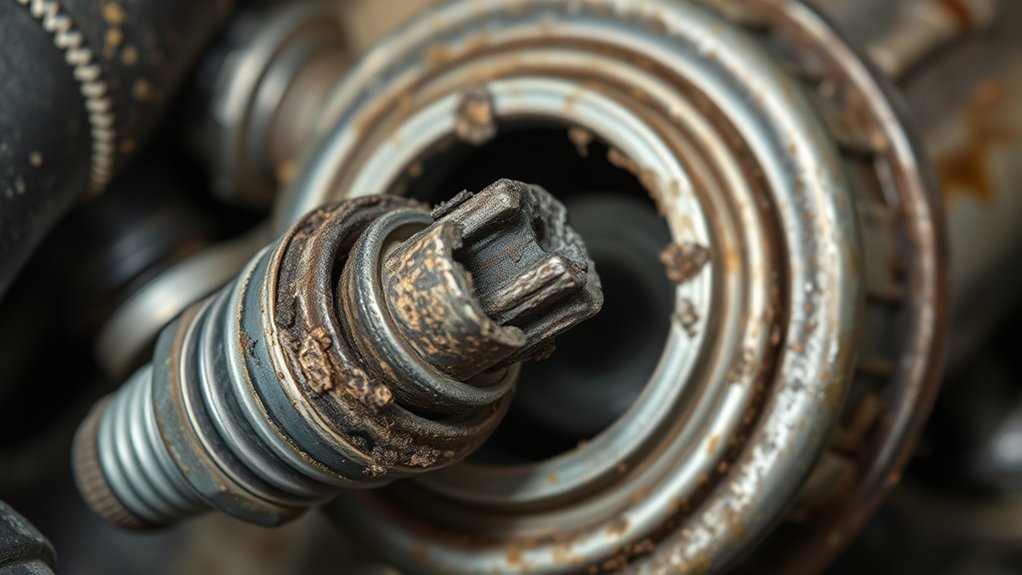
A rough engine idle often points to ignition issues, and worn or fouled spark plugs are common culprits. When spark plugs get fouled, they can cause uneven ignition, leading to a rough idle.
You might notice the engine shaking, sputtering, or RPM levels fluctuating during idling. These spark plug symptoms are signs of engine problems that could cause misfires and disrupt smooth operation.
Damaged or dirty spark plugs don’t ignite fuel properly, which causes vibrations and strange engine noises. Regularly inspecting and replacing your spark plugs can help prevent and fix rough idling caused by ignition issues.
Recognizing these signs early can save you from more serious engine problems down the road.
What Causes Spark Plugs to Foul and Lead to Engine Hesitation
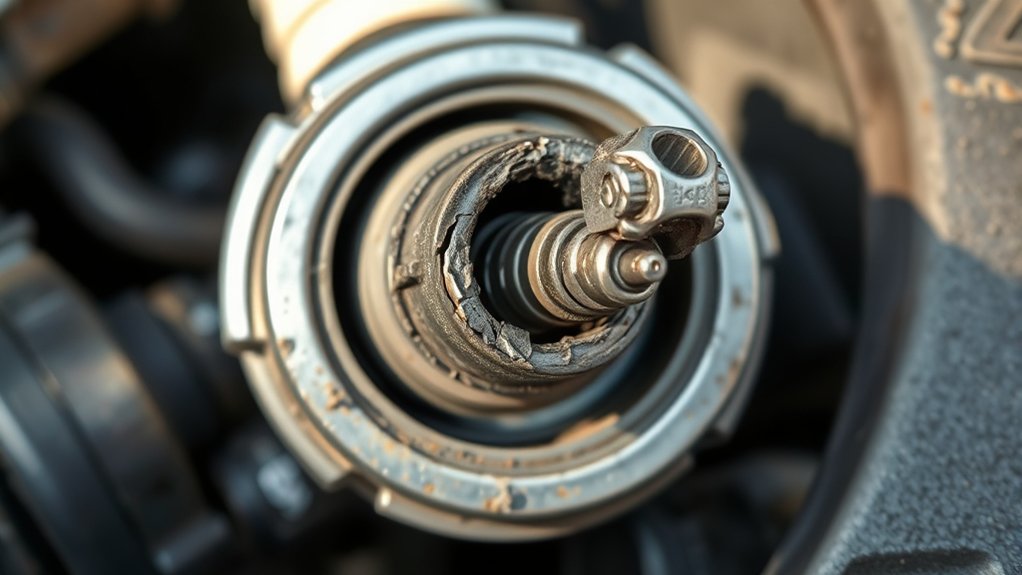
Fouling of spark plugs happens when unwanted substances build up on the electrodes, messing with proper ignition. Usually, this is caused by carbon deposits from rich fuel mixes or oil leaks, which insulate the electrodes and block the spark.
Unwanted substances like carbon deposits and oil leaks can foul spark plugs, disrupting ignition and engine performance.
This buildup makes it harder for the engine to burn fuel completely, leading to hesitation and rough idling. Too much carbon increases resistance, which weakens the spark and can cause misfires.
Oil leaks into the combustion chamber can also foul spark plugs with oil deposits, further hurting ignition and causing rough running. Using the wrong spark plug gaps or cheap plugs can make fouling worse and reduce ignition efficiency.
All these issues prevent the spark from firing properly, resulting in engine hesitation and uneven performance. Regular inspection and maintenance can help prevent fouling and keep your engine running smoothly.
How to Diagnose Spark Plug Problems and Other Causes of Rough Idle
Diagnosing rough idling caused by spark plug issues starts with a visual check of the spark plugs. Look for fouled plugs with soot, oil deposits, or corrosion, as these can lead to misfires and a rough idle.
Next, check the spark plug gap with a feeler gauge to ensure it matches the manufacturer’s specs. Incorrect gaps are a common cause of misfires.
Use engine diagnostic codes to find misfire codes like P0300-P0304. These point to spark plug or ignition problems that could be causing the rough idle.
Also, inspect ignition wires, coils, and connections for damage or wear. Faulty components here can mimic spark plug issues and result in rough running.
If everything looks good but the rough idle persists, consider doing a compression test. This helps rule out internal engine problems as the cause.
How to Clean or Replace Faulty Spark Plugs
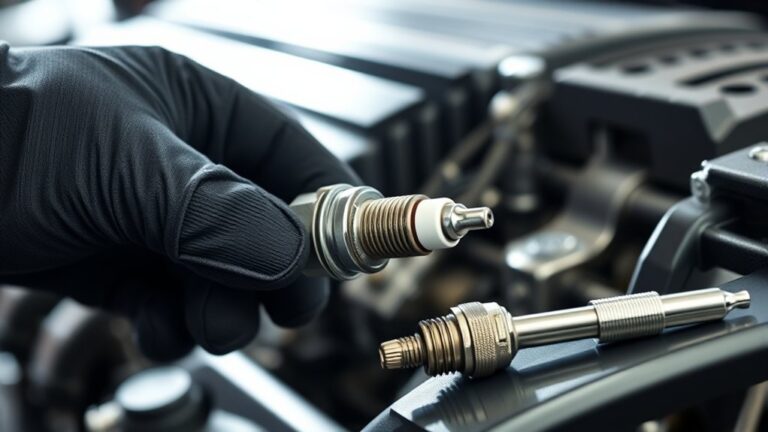
Start by removing the spark plugs with a spark plug socket and inspecting their condition for fouling, wear, or damage. If they’re fouled or damaged, clean them with a wire brush or replace them entirely, making sure to check and set the gap correctly.
When reinstalling, apply anti-seize on the threads and tighten to the proper torque for a secure seal.
Inspect Spark Plug Condition
Before cleaning or replacing spark plugs, carefully remove them from your engine using a spark plug socket. Once out, take a close look at the plugs for fouling, like soot, oil deposits, or ash buildup.
Check the condition of the electrode and insulator for signs of wear or damage. Fouled or heavily carbon-coated plugs can cause rough idling.
If the spark plugs are dirty or fouled, cleaning them with a wire brush or spark plug cleaner can bring back their performance. If they are severely worn or damaged, replace them with new ones that match your vehicle’s specifications.
When reinstalling, make sure to tighten the plugs to the proper torque. Proper inspection and cleaning help ensure good spark quality and smooth engine operation.
Proper Replacement Procedures
When replacing or cleaning spark plugs, proper procedures ensure your engine runs smoothly and reliably. Start by making sure the engine is cool to avoid burns and damage.
Use a spark plug socket with a rubber insert to remove spark plugs carefully, preventing damage to the porcelain insulator. Once removed, check and adjust the correct gap using a feeler gauge according to the manufacturer’s specifications.
Apply a small amount of anti-seize compound on the threads to make future removal easier, but keep it away from the electrode. When installing new or cleaned spark plugs, tighten them to the specified torque setting.
This helps prevent over-tightening or under-tightening, which can cause damage or poor contact. Following these steps guarantees a secure fit and peak engine performance.
Preventive Maintenance Tips to Avoid Rough Idle and Spark Plug Foulings
To prevent rough idling and spark plug fouling, make sure to replace your spark plugs regularly, according to your vehicle’s recommended mileage. This helps keep everything running smoothly.
Keeping your engine’s air and fuel systems clean and dry is also key. It reduces deposit buildup that can cause rough idling and foul plugs.
Using quality fuel and additives can really help maintain your spark plug performance. That way, you get a smoother engine operation overall.
Regular Spark Plug Replacements
Regularly replacing your spark plugs is a key step in maintaining smooth engine performance and preventing rough idle. Following the recommended replacement interval, usually between 30,000 to 100,000 miles, helps avoid fouling and misfires that cause rough idling.
Using high-quality spark plugs like Nickel or Iridium can extend service intervals and keep your engine running smoothly. Routine inspections and cleaning during maintenance can catch early signs of wear or fouling, preventing performance issues.
Promptly replacing spark plugs when you notice engine shaking, hesitation, or poor acceleration restores proper combustion and stabilizes idle. Maintaining a regular replacement schedule reduces carbon buildup, oil fouling, and deposits that contribute to rough idling.
Proper upkeep keeps your engine smooth and responsive over time. It also extends spark plug lifespan and overall engine efficiency. This helps prevent fouling that causes misfires and rough idle, keeping your engine performance steady and reliable.
Keep Engine Clean and Dry
Maintaining a clean and dry engine environment is key to preventing rough idling caused by spark plug fouling. Regularly cleaning your engine’s throttle body, MAF sensor, and oxygen sensor helps reduce carbon buildup that can foul spark plugs and cause rough idle.
After cleaning, run the engine for at least 10 minutes to burn off residual soot and keep the engine clean. Keeping the engine dry and free of oil leaks prevents oil contamination on spark plugs, which can lead to fouling and rough idling.
Ensuring the valve cover gasket seals properly stops oil leaks that might drip onto spark plugs and worsen engine performance. Regular inspections of spark plug wires and ignition components also help maintain a stable, dry ignition system, reducing fouling and rough idle issues.
Use Quality Fuel and Additives
Using high-quality fuel from reputable brands is one of the best ways to prevent deposit buildup on spark plugs, which can cause rough idling. Picking fuel with higher detergent levels, like Top Tier gasoline, helps keep fuel clean and reduces spark plug fouling.
Fuel additives such as Techron or Sea Foam can also clean fuel injectors and combustion chambers, boosting engine performance and stopping fouling in its tracks. To keep your engine running smoothly, try these tips:
- Regularly use quality fuel to help prevent deposits
- Add fuel additives for extra cleaning power
- Steer clear of contaminated or low-octane fuel to avoid knocking and fouling
When Should You See a Mechanic for Idle and Spark Plug Issues?
You should see a mechanic if your vehicle continues to experience rough idle even after you’ve cleaned or replaced the spark plugs. Persistent rough idle, misfires, stalls, or hesitation at idle indicate spark plug problems or ignition system issues that need professional diagnosis and fix.
If warning lights related to engine performance appear, a mechanic can run diagnostic tests to pinpoint the cause. Noticeable uneven or noisy idle that doesn’t improve with basic maintenance is another sign to seek professional help.
Furthermore, increased fuel consumption or black exhaust smoke can signal faulty spark plugs affecting your engine’s performance. Don’t delay—seeing a mechanic ensures proper diagnosis and effective repair to restore smooth idling and prevent further damage.
Common Mistakes to Avoid When Fixing Spark Plug-Related Idle Problems
When fixing spark plug-related idle problems, it’s easy to overlook some common mistakes that can make misfiring worse or delay fixing the issue.
First, not properly gapping new spark plugs can lead to poor ignition and rough idling. Make sure to check and set the gap correctly before installing.
Second, reusing fouled spark plugs without cleaning allows deposits to stay, which can keep causing engine misfires. It’s best to replace or clean them thoroughly.
Third, ignoring engine warning lights or diagnostic trouble codes related to ignition parts can hide bigger problems. Always pay attention to those signals.
Using incompatible or low-quality spark plugs also increases the risk of misfiring, especially under high engine heat. Stick with recommended parts for your vehicle.
Finally, skipping inspections of other ignition components like wires and coils can lead to similar idle issues. Regularly check these parts to keep everything running smoothly.
To avoid these mistakes, always check the spark plug gap, replace fouled plugs, and keep an eye on engine warning lights for potential ignition problems.
Frequently Asked Questions
Can Spark Plugs Fix Rough Idle?
Yes, replacing bad spark plugs can fix your rough idle. When spark plugs are worn or fouled, they cause misfires and inconsistent sparks, which lead to rough engine performance.
By installing new, properly gapped, high-quality spark plugs, you improve ignition and combustion stability. Regularly inspecting and replacing your spark plugs helps keep your engine running smoothly.
This not only reduces vibrations but also restores a steady, smooth idle. Ultimately, it makes your vehicle run more reliably.
What Kills Spark Plugs Quickly?
You accelerate spark plug wear by neglecting proper maintenance, ignoring engine issues, or using incorrect parts. Running your engine rich with too much fuel or ignoring oil leaks can quickly degrade them.
Using spark plugs with the wrong heat ratings also speeds up their wear. Short trips prevent the plugs from reaching proper temperatures, which can cause fouling. Improper ignition timing adds electrical stress and damages the plugs faster.
These mistakes, along with neglecting regular checks, can lead to rough idles and costly repairs. Taking care of your spark plugs is key to keeping your engine running smoothly.
What Are Four Signs a Spark Plug Should Be Replaced?
You should replace your spark plugs if you notice signs like engine misfires, hesitation, or rough idling, which indicate they’re failing.
A significant drop in fuel efficiency by 15-30% also points to worn plugs.
Furthermore, difficulty starting your engine repeatedly or needing multiple attempts suggests they’re past their prime.
Finally, if you see cracked, chipped, or melted electrodes during a visual check, it’s time for new spark plugs.
Can Bad Spark Plugs Cause Shaking at Idle?
Yes, bad spark plugs can turn your engine into a jittery dancer, causing shaking at idle. When spark plugs fail, they disrupt the engine’s rhythm, making it misfire and vibrate like a worn-out drum.
You might notice your engine trembling as if it’s struggling to keep steady. Replacing those faulty plugs restores harmony, smoothing out the idle and letting your engine perform its dance with grace once again.
Conclusion
Ignoring rough idle symptoms might save you a quick repair, but it can lead to more costly engine damage down the line. Addressing spark plug issues promptly keeps your engine running smoothly, ensuring reliability and efficiency.
Neglecting these problems could cause you to spend more on repairs later. Proactive maintenance offers peace of mind and saves money in the long run.
Don’t let small problems turn into big headaches. Stay attentive and fix spark plug issues before they take a toll on your engine’s health.