How Do You Drive With a Tonneau Cover up
Many truck owners want the convenience of driving with their tonneau cover up but worry about safety and security. You’re not alone—navigating this can feel tricky, especially when unsure about the best practices.
You can drive with a tonneau cover up as long as your cargo is securely fastened, evenly distributed, and stays below the cover’s height. Make sure the cover remains stable and doesn’t obstruct your view or safety features.
Regularly check fasteners, seals, and the load during your trip. Keep your speed reasonable and be cautious in weather or off-road conditions.
Want to know more about safe practices and maintenance? Keep going for detailed tips.
Key Takeaways
- Ensure your cargo is properly secured and evenly distributed. Make sure it’s below the height of the tonneau cover before you start driving.
- Double-check that all fasteners and locks are fully engaged. The cover should be stable and secure before hitting the road.
- It’s also a good idea to check your local laws. Confirm that driving with the cover up is legal and safe in your area.
- When you’re on the road, keep your speed below 60 mph. Avoid sharp turns and accelerate gradually to help maintain stability.
- During your trip, regularly inspect and re-tighten cargo straps and fasteners. This helps prevent shifting or losing your load along the way.
When Is It Safe and Legal to Drive With Your Tonneau Cover Up?
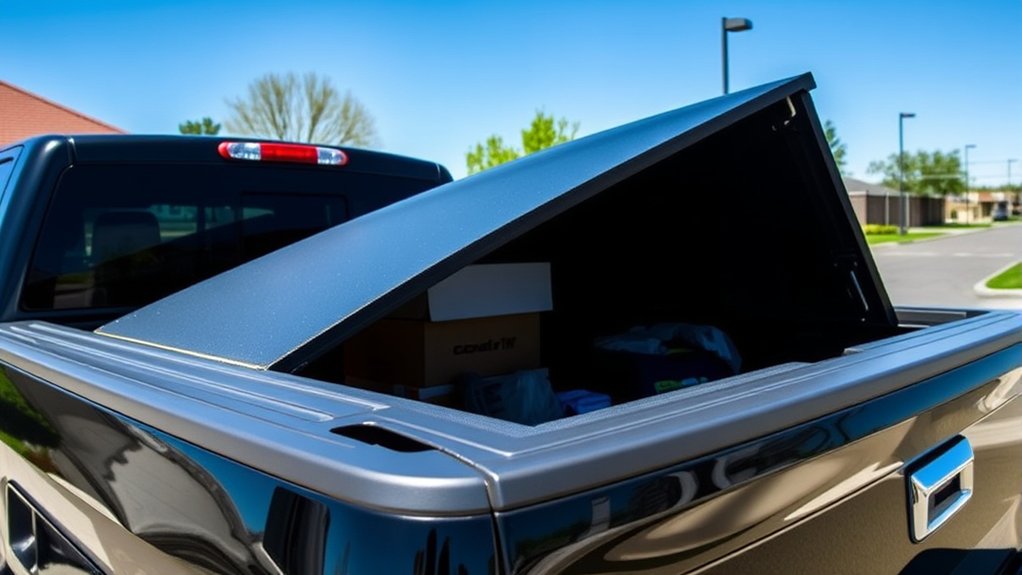
You can drive with your tonneau cover up safely and legally when your cargo is securely fastened and won’t pose a hazard to other drivers.
In this case, the truck bed’s load is below the height of the cover and properly restrained to prevent shifting or falling out.
The load is secure and below the cover’s height, ensuring safe transport without shifting or falling out.
It’s important to ensure the cover is secured and stable, not blocking your rear view or safety features.
Regional laws vary, so always check local regulations about open truck beds or covers before hitting the road.
As long as the cover stays secure and the load is below the cover’s height, driving with it up is generally allowed and legal.
Double-check that your cargo doesn’t create hazards for you or other drivers, and you’re good to go.
How Do You Properly Secure Your Cover Before Hitting the Road?
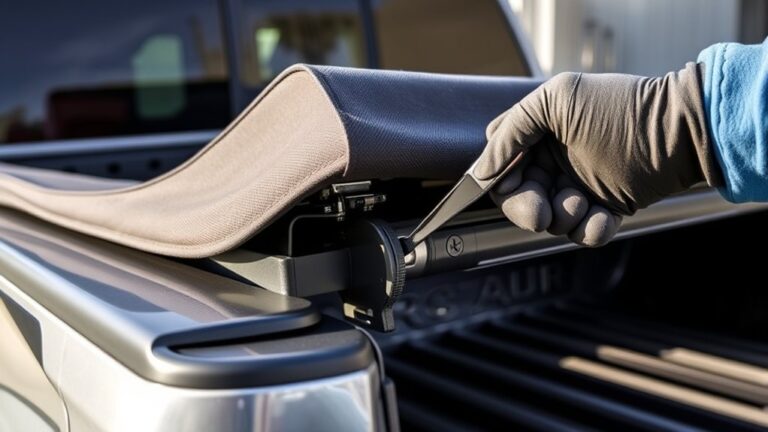
Before hitting the road, take a few moments to make sure your tonneau cover is securely fastened. First, check that all latches, snaps, or Velcro straps are fully engaged and fastened.
Next, ensure the cover is evenly aligned along the truck bed rails to prevent shifting during transit. Gently tug at multiple points to confirm it’s firmly secured and not loose or flapping.
Lock the cover tightly using the provided keys. Listen for clicks or resistance to make sure it’s properly engaged. Finally, inspect the edges and seams for gaps or wear, and re-secure any loose fasteners to keep everything tight and protected.
Use the table below as a quick reminder:
| Action | Checkpoint |
|---|---|
| Fasten all fasteners | Fully engaged and secure |
| Align the cover | Even along truck bed rails |
| Tug at multiple points | Confirm firmly secured |
| Lock with keys | Listen for clicks or resistance |
How Do Cover Type and Cargo Load Impact Safety When Driving With the Cover Up?
The type of tonneau cover you choose really affects its stability and safety when driving with it up. Hard covers offer more support, which helps reduce wind resistance and keeps things steady. Soft covers might be more flexible, but they’re generally less sturdy.
Your cargo load also makes a big difference. If you securely fasten everything and keep the load evenly distributed, it’s less likely to shift around. Shifting cargo can damage the cover or even create hazards on the road.
Heavy or uneven loads put extra strain on the locking mechanisms and hinges. This can increase the chances of failure or even detachment while you’re driving. Taller or bulky items can also block your view or catch wind, which might cause lift or instability.
Managing your cargo properly and choosing the right cover type are key steps for safe driving with the cover up.
How Can You Secure and Distribute Cargo When Driving With the Cover Open?
When driving with the cover open, it’s important to carefully position your cargo to keep the load balanced and prevent shifting.
Put heavier items toward the rear and center of the load. Use straps or bungee cords to hold everything tightly in place.
Adding padding or blankets can protect fragile items and prevent damage to the cover or other cargo.
Proper Load Placement Techniques
Securing your cargo properly is key for safe driving with your tonneau cover open. Shifting loads can impact vehicle stability and cause damage to your truck.
Start by placing heavier cargo toward the rear and center of the truck bed. This helps prevent shifting and keeps everything balanced.
Use padding or blankets between loads and the cover to protect surfaces from scratches or dents, especially from sharp or heavy items.
Make sure to secure loads tightly with rated straps or bungee cords. Check that they don’t loosen or bounce around during your trip.
Avoid placing cargo near the hinges or mechanisms of the cover to prevent any damage.
Finally, regularly check and re-tighten your straps to keep the load stable. This helps prevent shifting and ensures a safe, smooth ride.
Securing and Protecting Cargo
Ever wondered how to keep your cargo safe and stable while driving with the tonneau cover open? To secure cargo, use straps attached to built-in anchor points or bed rails, which help prevent shifting during transit.
Place heavier items toward the rear and distribute weight evenly to maintain balance. Wrap sharp or fragile objects with soft padding to prevent damage to the tonneau cover.
Tighten straps just enough to secure the load without overstressing the cover or causing indentations. During stops, regularly check and adjust cargo ties to keep everything secure.
Here’s a simple visual:
| Cargo Type | Securing Method | Notes |
|---|---|---|
| Heavy items | Straps to bed rails | Keep balanced front/back |
| Fragile objects | Padding | Prevent damage to cover |
| Sharp objects | Protective covers | Avoid punctures |
| Light items | Loose straps | Check frequently during drive |
What Speed and Maneuver Tips Should You Follow When Driving With the Cover Up?
When driving with the cover up, keep your speed moderate, ideally below 60 mph, to minimize wind effects.
Be cautious with sharp turns or sudden movements that could shift your cargo or stress the cover.
Regularly check your straps and fasteners, especially on long trips, to make sure everything stays secure.
Maintain Moderate Speed
Driving with a tonneau cover up requires maintaining a moderate speed to guarantee safety and cargo security. Staying below 60 mph helps reduce wind resistance that can cause the cover to flap or lift, keeping your load secure.
Accelerate and decelerate gradually to lessen stress on the cover and prevent cargo from shifting. Be cautious when turning corners or making sharp maneuvers, as sudden movements can damage the cover or displace cargo.
Increasing your following distance gives you more time to react and accounts for longer stopping distances caused by the load. During long trips, check the cover and cargo regularly, especially at higher speeds, to ensure everything remains secure.
Keeping your speed moderate helps protect your cargo and maintains the cover’s integrity.
Practice Cautious Maneuvering
Practicing cautious maneuvering is key to keeping your load secure when driving with the tonneau cover up. Maintain a moderate speed, preferably under 55 mph, to cut down on wind pressure that can cause the cover to flap or lift.
Avoid sharp turns or sudden moves, as they can shift or dislodge your cargo or the cover itself. Regularly check the fasteners and straps holding your load to prevent any movement during your trip.
Be extra careful on rough terrain since bumps can put more stress on the cover and attachments. In windy conditions, slow down even more to stop the cover from flapping or coming loose.
Cautious maneuvering helps reduce risks and keeps your cargo safe, especially when driving over uneven roads or at higher speeds. Always stay alert and adjust your driving to the conditions.
How Do Weather Conditions Affect Your Cover’s Security and Safety?
Weather conditions can really impact the security and safety of your tonneau cover. Rain, snow, and wind can cause covers that aren’t secured well to slip, lift, or flap, which can be unsafe.
Weather can compromise your tonneau cover’s security and safety if not properly secured.
When snow piles up, it adds extra weight and can damage or even detach your cover if you don’t clear it away quickly. Strong winds can make the cover flap or lift, especially if the locks aren’t fully engaged.
Moisture from rain or snow can sneak through gaps, weakening seals and risking water getting inside your truck bed. To stay safe, it’s a good idea to check your locks, seals, and fastenings regularly, especially when bad weather hits.
Properly securing your cover keeps it in place, protecting your cargo and preventing damage caused by weather. Regular inspections help ensure everything stays tight and safe during storms or heavy rain.
How to Inspect and Maintain Your Cover for Safe Open-Drive Use
To keep your tonneau cover secure and working properly when open, regular inspections and maintenance are key. Check for tears, holes, or signs of wear that could weaken its structure.
Make sure all clamps and fasteners are tight and secure. Test hinges, rails, and rolling parts to ensure they move smoothly and don’t jam or get damaged.
Clean the surface, edges, and seams often to remove dirt and debris, which can cause deterioration over time. Also, check that seals, gaskets, and locking mechanisms are in good shape and engaged properly.
Doing these routine checks helps keep your cover secure and weather-resistant, so you can use it safely in open drive without risking damage or losing cargo.
What Are the Off-Road Risks and Best Practices When Driving With the Cover Up?
Driving off-road with the tonneau cover up can be risky if you don’t take certain precautions. Uneven terrain and bumps can cause your cargo to shift or fall out, especially if you’re not careful.
Risks go up if loads aren’t properly secured. Loose or unsecured items might bounce or shift unexpectedly on rough surfaces, which can damage the cover, truck bed, or vehicle parts.
The cover can catch the wind, adding strain to the locking mechanisms during bumpy rides. To keep everything safe, make sure your loads are tightly secured and avoid oversized cargo that might snag on obstacles.
It’s also a good idea to regularly check the cover’s condition. Following these simple tips helps prevent damage and keeps your cargo safe during your off-road adventures.
Frequently Asked Questions
Can I Drive With My Tonneau Cover Up?
Yes, you can drive with your tonneau cover up if it’s designed for that, like a fold-up or roll-up cover. Just make sure it’s securely fastened and locked so it doesn’t flap around or come off.
Be aware of increased wind resistance at high speeds, and double-check that your cargo is well-secured before driving. Also, check your local laws to make sure driving with the cover up is allowed in your area.
Is It Better to Drive With the Tonneau Cover Open or Closed?
It’s generally better to drive with the tonneau cover closed because it offers better weather protection, security, and reduces wind resistance.
If you’re carrying a small, secure load for a short trip, opening the cover can improve airflow and accessibility.
For longer drives or in bad weather, keeping it closed helps protect your cargo, improves fuel efficiency, and keeps everything secure.
Always consider your cargo, security, and weather conditions when making your choice.
Can You Drive a Truck With a Tonneau Cover Through a Car Wash?
You can drive your truck with a tonneau cover through a car wash, but you should be careful. Imagine the powerful jets spraying water, and make sure your cover is securely locked or sealed.
For soft covers, double-check the seals to prevent water from getting inside. It’s best to choose touchless or manual washes to avoid damage from brushes.
After the wash, inspect your cover for any leaks or loose hardware. This helps keep your truck protected and in good shape.
How Easy Is It to Take off a Tonneau Cover?
Removing a tonneau cover is usually pretty straightforward, especially with models designed for quick removal. You can often do it in just a few minutes by releasing clamps, unfastening fasteners, or lifting it off after disengaging locking points.
Tool-less designs make the process even easier since you can detach the cover by hand. Soft roll-up covers are the simplest—they require minimal effort and no tools to remove.
Conclusion
Remember, when you choose to drive with your tonneau cover up, you’re opening a little door to the open road’s whispers and wild whispers. Stay cautious and attentive, like a gentle breeze guiding your journey.
Keep your cargo balanced and your speed steady to ensure your adventure remains smooth and safe. With careful attention and respect for the elements, you’ll enjoy your drive as freely as a bird soaring across the endless sky.
Driving with a tonneau cover up can be enjoyable, but always stay aware of the conditions and your surroundings. Being mindful helps keep your load secure and your drive safe.
By following these tips, you’ll be able to enjoy your drive with a tonneau cover up while staying safe on the road.