How to Restore a Faded Hard Tonneau Cover in 10 Easy Steps
Dealing with a faded hard tonneau cover can be pretty frustrating, especially when you want your truck to look its best. You’re not alone—many people struggle with restoring that dull, weathered look back to its original shine.
Luckily, with a little effort, you can bring your cover back to life and keep it looking new longer.
To restore your faded hard tonneau cover, start by inspecting its condition and gathering the right tools like microfiber cloths, a gentle wash, and restoration products.
Clean the surface thoroughly, removing dirt and grime, then prepare it for applying a restorer designed for plastics or vinyl.
Work in sections, buff to smooth the finish, and finish with a protective layer.
Regular maintenance and protective measures help keep it looking new longer—keep going to uncover more tips!
Key Takeaways
- Inspect the cover’s condition and identify areas needing cleaning or restoration.
- Rinse thoroughly and wash with mild shampoo to remove dirt and surface grime.
- Apply a compatible plastic or vinyl restorer evenly, then buff to bring back the shine.
- Use UV protectants regularly to prevent future fading and sun damage.
- Maintain with routine cleaning and reapply protectants every few months.
Check Your Tonneau Cover’s Condition
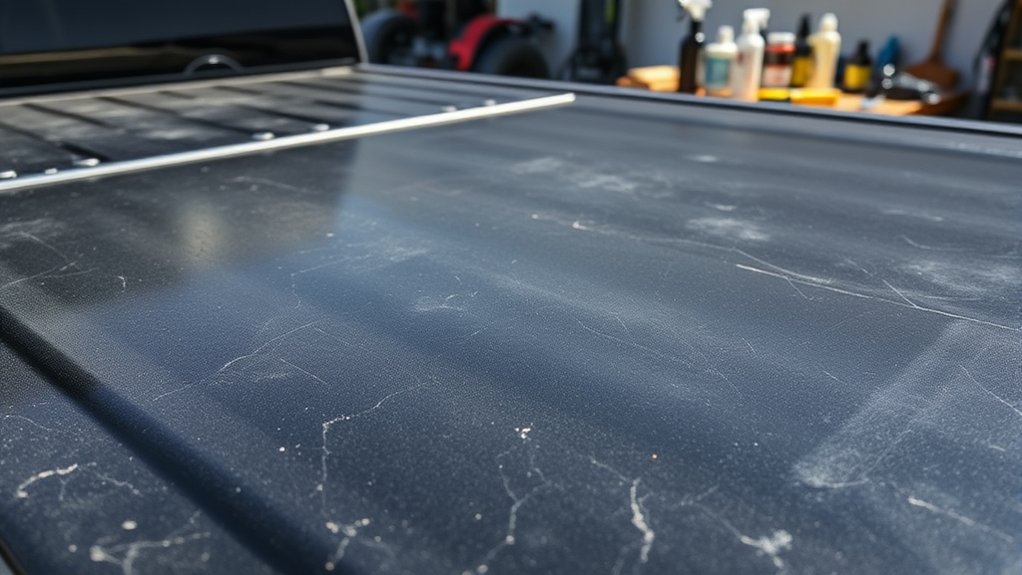
Before trying to restore your faded tonneau cover, it’s important to check its current condition. Look at the plastic surface for signs of fading, discoloration, or dullness caused by sun or environmental exposure.
Check for cracks, splits, or peeling, which show that the material is deteriorating. Also, examine textured areas for trapped dirt or grime that might need a good cleaning before restoration.
Notice if the color has lightened significantly or lost its shine, which could mean you need restoration products. To be sure, test a small hidden area with a cleaning solution to see how it reacts.
This careful check will help you decide whether your cover just needs a cleaning or if it needs more intensive restoration to bring back its original look.
Gather Your Tools and Supplies
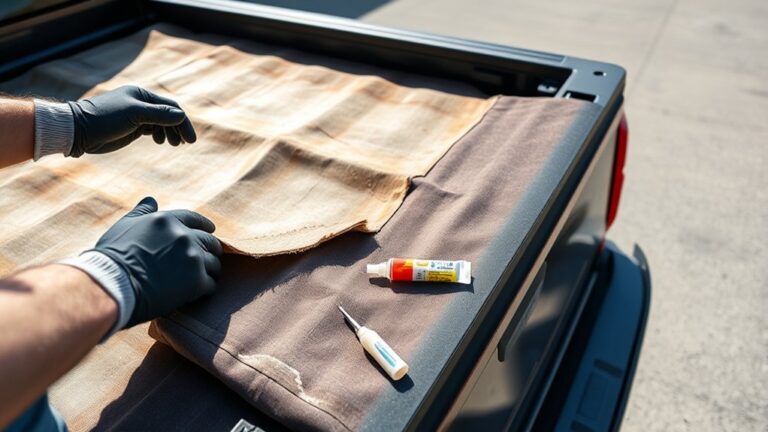
Start by gathering your essential cleaning tools like car shampoo, microfiber towels, and a hose for rinsing.
Next, collect recommended restoration products such as Rustoleum Wipe New or VRP, along with items like spray bottles and foam applicators for easy application.
Don’t forget to wear safety gear like gloves and masks to keep yourself protected during the process.
Essential Cleaning Tools
To effectively restore a faded hard tonneau cover, gathering the right cleaning tools is essential. You’ll want a high-quality microfiber wash mitt to gently clean the surface without scratching it.
Soft microfiber towels are perfect for drying and buffing, while a gentle car shampoo helps lift dirt without causing damage. Use a hose with a spray nozzle or a pressure washer set to low to rinse away loose debris thoroughly.
Prepare two buckets—one with soapy water and one with clean water—to rinse your wash mitt frequently. Furthermore, a plastic or vinyl restorer spray, like Meguiar’s Ultimate Black or Chemical Guys VRP, is key to restoring faded surfaces after cleaning.
For dust removal, consider a California Car Duster or soft-bristled brush to ensure a thorough clean.
Restorer Application Supplies
Gathering the right application supplies is essential for a successful restoration. First, make sure you have a high-quality, water-based restorer designed for plastic or vinyl surfaces to effectively restore and protect your faded cover.
You’ll also need cleaning supplies like car shampoo, a hose, water buckets, and microfiber towels to thoroughly clean and prepare the surface. Use tools like a wash mitt and spray bottles for even application, and a microfiber cloth for buffing and spreading the restorer smoothly.
Optional products like Stoner’s Trim Shine can add UV protection, while marine-grade wax offers extra durability. Always work in a well-ventilated area to safely handle products with strong fumes and ensure proper drying.
Having these supplies ready ensures a clean, even finish.
Clean Your Cover the Right Way
Wondering how to effectively clean your faded hard tonneau cover without causing damage? The key is gentle cleaning and protecting.
Use a mild car shampoo and a soft wash mitt to carefully wash the surface, avoiding abrasive tools that could scratch. Rinse thoroughly with water to remove dirt, debris, and soap residue, making sure no cleaning agents are left behind.
Dry the cover completely with clean microfiber towels to prevent water spots and prepare the surface for restoration products. For textured surfaces, use a soft brush or detailing tool to reach into crevices and remove trapped dirt.
Prepare the Surface Before Restoring
Start by thoroughly cleaning the cover with soap and water to remove dirt and debris. Use a soft brush or microfiber cloth for textured areas.
Rinse the surface completely and dry it with clean microfiber towels, paying attention to crevices. Make sure the surface is fully dry before applying any restorers to ensure proper adhesion and prevent streaking.
Thorough Cleaning Process
Before applying any restoration products, you need to thoroughly clean the tonneau cover to guarantee it’s free of dirt and debris. Start by rinsing the cover with water to remove loose dirt and particles.
Next, use a mild car shampoo and a soft wash mitt to gently clean the surface, making sure all contaminants are lifted. For textured areas, pay extra attention to grooves by gently scrubbing with a microfiber cloth or soft brush.
Once you’ve washed the entire cover, rinse again to remove soap residue. Finally, dry the surface completely with clean microfiber towels to prevent water spots and prepare it for restoration.
- Rinse thoroughly before washing
- Use a soft wash mitt for gentle cleaning
- Focus on textured grooves
- Remove all soap residue
- Dry completely with microfiber towels
Ensure Complete Drying
Ensuring the tonneau cover is completely dry is key for a good restoration. Start by thoroughly drying all areas with a clean microfiber towel, paying close attention to textured surfaces and seams.
Microfiber towels are great because they absorb moisture well, leaving a smooth, dry surface. After towel drying, let the cover air dry in a shaded, well-ventilated space for at least 30 minutes to get rid of any remaining dampness.
To check for residual moisture, gently press with a dry glove or cloth. Any lingering dampness can weaken the adhesion of restoration products. Avoid applying restorers on hot surfaces or in direct sunlight, as leftover water can vaporize and interfere with bonding.
Proper drying ensures your restoration will stick properly and last longer.
Apply Restorer to Faded or Dull Areas
To get the best results, start by thoroughly cleaning the faded or dull areas with soap and water to remove dirt and contaminants. Once they’re dry, pick a restoration product suited for your tonneau cover material.
Use a small amount of the product, like Rustoleum Wipe New or Solution Finish, and test it on a hidden spot first to make sure it’s compatible. When applying, use a microfiber cloth or applicator pad to spread the product evenly over small sections.
Keep these tips in mind: work in manageable sections to avoid uneven coverage, apply sparingly to prevent waste, and work in a well-ventilated area for safety. Let each section dry for 10-15 minutes.
Finally, buff the area with a clean microfiber towel for a smooth finish. This process helps restore your tonneau cover’s look effectively.
Seal and Protect Your Cover From UV Damage
Applying a UV protectant like 303 Protectant is essential for shielding your tonneau cover from harmful ultraviolet rays that cause fading and deterioration. By creating a strong seal, the UV protectant absorbs and reflects UV rays, preventing further damage.
Reapplying the seal every 3 to 6 months ensures continuous protection and prolongs your cover’s lifespan. Use products formulated specifically for plastic or vinyl surfaces to avoid damage and maximize effectiveness.
Before applying, clean and dry your cover thoroughly to improve adhesion. Parking in shaded areas also helps minimize UV exposure, reducing the need for frequent reapplications.
Regularly sealing and protecting your tonneau cover keeps it looking new longer and prevents the accelerated fading caused by sun damage.
Buff and Finish for a Smooth, Restored Look
To get an even, smooth finish, start by buffing the surface with a microfiber cloth to remove any excess product.
Use a fine polish or dedicated compound in light, circular motions to refine the look and eliminate streaks.
Make sure the restorer dries completely before buffing for a professional, glossy result.
Achieve Even Application
Achieving an even application starts with using a clean, dry microfiber towel to buff the restorer or protectant across the surface in small sections. Make sure to apply light, consistent pressure to avoid streaks or patches, so you get a smooth, uniform finish.
To make it look even better, buff in circular motions to remove excess product and boost shine. Finish up with a separate, dry microfiber cloth to gently polish the surface for a high-gloss, even look.
Proper care means letting the surface dry completely before exposing it to harsh conditions. Keep these tips in mind:
- Work in small sections for better control
- Use light pressure throughout
- Buff in circular motions for even coverage
- Finish with a gentle polish
- Allow drying time before use
Enhance Surface Smoothness
Once you’ve buffed the surface to remove excess product and improve its shine, the next step is to refine the finish for a silky-smooth appearance. Use a microfiber cloth or foam pad with a polishing compound to achieve this.
Gentle circular motions during buffing prevent swirl marks and create an even, polished look. Buffing with a microfiber cloth helps eliminate any remaining haze, enhancing the surface’s smoothness.
For added refinement, apply a dedicated plastic or vinyl polish, which fills in minor imperfections and boosts gloss. Allow the surface to cure and dry completely after polishing to guarantee a sleek, professional finish.
This process will leave your tonneau cover looking revitalized, with a smooth, glossy, and uniformly restored surface.
Set Up a Regular Maintenance Routine
Establishing a regular maintenance routine is key to keeping your faded hard tonneau cover looking its best. Staying consistent helps prevent dirt buildup, fading, and damage, which can extend its lifespan.
Regular maintenance keeps your hard tonneau cover looking new and extends its lifespan.
Consider these tips to stay on top of maintenance:
- Clean the cover with mild soap and water every 1-2 weeks.
- Use a microfiber towel to buff after cleaning and product application.
- Reapply plastic or vinyl restorer every 6 months for better color and UV protection.
- Schedule quarterly inspections to catch fading, cracks, or damage early.
- Keep a log of maintenance activities and product reapplications for timely upkeep.
Following this routine helps your cover stay protected and vibrant. Regular maintenance with the right products preserves its appearance and durability, making your restoration efforts last longer.
Troubleshoot Common Restoration Problems
When restoring a faded tonneau cover, you might face issues like uneven results, streaks, or surface damage if you don’t troubleshoot properly. Make sure the surface is clean and free of contaminants before you apply a restorer.
Deep scratches or severe oxidation need sanding or polishing first. Skipping this step can cause poor adhesion and worse results. Using incompatible products, like plastic restorer on metal, can also reduce effectiveness.
Be careful not to rub too hard or over-apply the product. This can damage the surface and make fading worse.
| Problem | Solution |
|---|---|
| Uneven finish | Clean thoroughly, sand if needed, use compatible products |
| Streaks or blotches | Ensure all contaminants are removed before applying |
| Surface damage | Avoid over-rubbing and apply restorers gently |
Keep Your Cover Protected From Sun and Weather
Protecting your tonneau cover from sun and weather is key to keeping it looking good and lasting longer. Regularly using UV protectants can block up to 90% of sun damage, helping to prevent fading and cracking.
Parking in shaded spots or garages also helps reduce exposure to harmful UV rays that can degrade the material. Using a protective cover or a dedicated UV protectant creates a barrier against rain, snow, and dust.
Frequent cleaning with mild soap and water removes pollutants and dirt that speed up weathering and surface wear. Reapplying protective products every 3 to 6 months keeps your cover’s color, flexibility, and resistance to the elements in top shape.
Following these simple steps will extend the life of your tonneau and keep it looking its best.
Frequently Asked Questions
How to Restore a Faded Hard Tonneau Cover?
To restore a faded hard tonneau cover, start by giving it a good cleaning with mild soap and water to remove dirt and grime. This step helps prepare the surface for the restoration process.
Next, apply a plastic or vinyl restorer evenly using a microfiber cloth. This will help bring back its color and shine, making it look refreshed.
For stubborn fading, you might want to consider using a marine-grade wax or Solution Finish. These products add extra protection and help maintain the restored look.
To keep your cover looking its best, regularly reapply protectants and keep it clean. Consistent maintenance is key to maintaining that fresh, restored appearance.
Can You Treat a Tonneau Cover to Help With Fading?
Yes, you can treat a tonneau cover to help with fading. Think of it as giving your cover a shield. Using UV protectants and plastic restorers, you can slow down the sun’s damage.
Regular cleaning and conditioning can bring back some shine. But for severe fading, professional refinishing might be necessary.
Applying protective coatings not only improves the look but also extends your cover’s lifespan. This helps keep it looking good for the long haul.
How to Shine up a Tonneau Cover?
To shine up your tonneau cover, start by giving it a good clean with mild soap and water to get rid of dirt. This helps prep the surface for the rest of the process.
Next, take a plastic or vinyl restorer and apply it evenly with a microfiber cloth. Work in small sections so you don’t miss any spots.
Gently buff the cover to bring out a nice glossy finish. To keep that shine looking fresh, wipe it down weekly and reapply the restorer every few months.
This way, your tonneau cover stays vibrant and protected all year round.
Do Tonneau Covers Fade?
Yes, tonneau covers do fade over time. You’ll notice the color becoming dull, gray, or discolored, especially if your cover is made of plastic, vinyl, or fiberglass.
UV rays from the sun break down the surface materials, and environmental pollutants like dirt and smog speed up the fading process. Regular exposure to harsh weather without protective treatments makes your cover fade faster.
This reduces its original vibrancy and appearance.
Conclusion
With a little effort, your faded tonneau cover can regain its original shine, turning from dull to dazzling. Think of it as restoring a worn-out canvas to a vibrant masterpiece, with each step bringing it back to life.
Like a shield reborn under the sun, your cover will stand strong and striking, ready to face the elements again. Just a few simple steps can transform a tired cover into your truck’s proud, polished crown.