What Gas Does a Jeep Wrangler Take?
Many Jeep Wrangler owners find themselves confused about what fuel to use. You’re not alone—navigating the right type of gasoline can feel overwhelming with so many options out there.
Your Jeep Wrangler mostly runs on regular unleaded gasoline with an octane rating of 87, which works for most models. However, if you have a turbocharged engine or a high-performance version like the 392 V8, you’ll likely need premium fuel, usually 91 octane or higher.
Always check your owner’s manual or fuel door label to confirm the right type.
Keep exploring to uncover more tips on fueling your Wrangler properly and avoiding damage.
Key Takeaways
- Most Jeep Wranglers run on regular unleaded gasoline (87 octane).
- Diesel models require diesel fuel; using gasoline can cause severe engine damage.
- Turbocharged or high-performance engines may need premium fuel (91+ octane).
- Always check the owner’s manual or fuel door labels for the correct fuel type.
- E85 ethanol fuel is not typically recommended unless specified by the manufacturer.
What Gas Should I Use in My Jeep Wrangler?
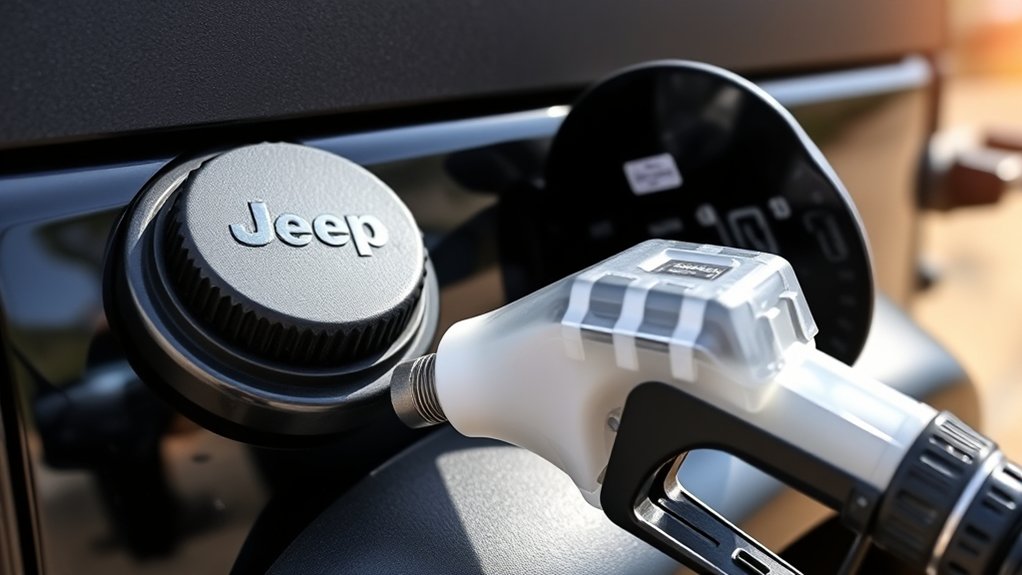
Wondering what type of gas to use in your Jeep Wrangler? For most models with the 3.6L V-6 engine, regular 87-octane fuel works just fine, and you won’t have any issues.
If you have a turbocharged Jeep Wrangler with a 2.0L engine, it’s best to use premium 91+ octane fuel for peak performance. The high-performance 392 V8 engine strictly requires premium fuel to prevent knocking and keep things running smoothly.
Remember, diesel-powered Jeep Gladiators need diesel fuel, which is quite different from gasoline. Always check your owner’s manual for your specific Jeep Wrangler’s recommended fuel type and octane rating.
Using the right fuel helps keep your Jeep running efficiently and prevents unnecessary engine problems.
What Are the Recommended Fuel Types for Wrangler Engines?
Your Wrangler’s engine determines the best fuel for peak performance.
Most models run well on regular 87-octane gasoline. However, turbocharged and high-performance engines often need premium 91+ octane fuel.
Always check your owner’s manual to make sure you’re using the right fuel type for your specific engine.
Engine-Specific Fuel Needs
Jeep Wranglers have specific fuel needs based on their engine type to keep them running at their best. For the 3.6L V-6 engine, regular unleaded gasoline with an octane rating of 87 works just fine.
Turbocharged engines like the 2.0L Turbo and 4xe hybrid might perform best with premium fuel (91+ octane), but they can also run on 87 octane if needed. The 392 V8 engine requires premium fuel (91 or higher octane) to prevent knocking and keep it running smoothly.
Diesel-powered Wranglers and Gladiators need diesel fuel, which is different from gasoline. Always check your owner’s manual to confirm the right fuel type for your engine to ensure maximum performance and engine health.
Recommended Octane Ratings
Choosing the right octane rating for your Jeep Wrangler’s fuel is key to keeping it running smoothly and avoiding damage. The type of engine your vehicle has determines what octane level you should use.
For the 3.6L V-6 engine, regular 87-octane gasoline is usually enough for good performance. But if you have turbocharged engines like the 2.0L Turbo or the 4xe hybrid, premium fuel with 91+ octane is generally recommended. They can run on 87 octane too, but that may require ECU adjustments.
High-performance engines like the 6.4L HEMI V-8 need premium fuel without exception. Using a lower octane than recommended can cause knocking and long-term engine issues, especially in turbocharged models.
Always check your Jeep owner’s manual for the specific fuel recommendation to keep your vehicle running its best.
Fuel Type Compatibility
What type of fuel should you use to guarantee ideal performance and longevity for your Wrangler? For most models with the 3.6L V-6 engine, regular unleaded gasoline with 87 octane is sufficient. Using the correct fuel type ensures smooth operation and helps prevent engine issues.
Turbocharged engines like the 2.0L Turbo and 4xe hybrid usually recommend premium 91+ octane fuel for maximum performance. The powerful 392 V8 engine strictly requires premium fuel to prevent knocking and maintain efficiency.
Diesel-powered Jeep Gladiator models use diesel fuel and have different requirements. Always check your owner’s manual for specific fuel recommendations based on your Wrangler’s engine type and year.
Using the right fuel type helps keep your vehicle running smoothly and prolongs its lifespan.
What Octane Ratings Are Best for My Jeep Wrangler?
The octane rating you choose depends on your Jeep Wrangler’s engine type, so it’s best to pick the right one for optimal performance and durability.
Higher octane fuels can give you more power and a smoother ride if you have a turbocharged or high-performance engine. But keep in mind, they usually cost more.
Always check your owner’s manual to see the recommended octane level for your specific Jeep Wrangler model.
Engine Type Requirements
Your Jeep Wrangler’s engine type determines the best octane rating for your fuel, helping you get the most performance and keep your engine healthy.
The 3.6L V-6 engine runs best on regular 87-octane gasoline, which is simple for everyday driving.
If you have turbocharged 2.0L or 4xe hybrid models, you should use premium 91+ octane fuel for optimal performance. They can run on 87 octane, but only if you adjust the ECU.
The high-performance 392 V8 engine needs premium 91+ octane fuel to prevent knocking and operate correctly.
Diesel models like the Gladiator with a 3.0L turbodiesel don’t require gasoline octane ratings at all.
Using the correct octane rating based on your engine type helps protect your engine and keeps it running efficiently.
Performance Benefits of Higher Octane
Higher octane fuels, like 91 or 93 octane, can boost your Jeep Wrangler’s performance by helping prevent knocking, especially in turbocharged and high-compression engines. Using premium gas may give slight gains in horsepower and fuel efficiency if your engine is designed for higher octane ratings.
If your Jeep has a 3.6L V-6 engine, it runs best on regular 87 octane. Higher octane fuel probably won’t make much difference in that case. Turbocharged engines like the 2.0L Turbo or 4xe hybrid do benefit from premium fuel to maximize performance and protect engine parts.
Here’s a quick comparison:
| Octane Rating | Engine Type | Benefit |
|---|---|---|
| 87 | Regular engines | No significant benefit |
| 91-93 | Turbocharged/high compression | Improved performance and efficiency |
| Higher than recommended | Not usually beneficial | Little to no advantage |
Fuel Efficiency and Cost
Figuring out the best octane rating for your Jeep Wrangler can save you money while keeping good performance. Most models with a 3.6L V-6 engine run efficiently on regular 87-octane gasoline, which is the minimum recommended octane.
Turbocharged models, like the 2.0L engine, often need premium fuel (91-octane) for ideal performance but can run on 87-octane with some loss of power. The high-performance 392 V8 engine strictly requires premium 91+ octane fuel to prevent knocking and ensure smooth operation.
Using higher octane fuel than recommended usually doesn’t improve fuel economy in non-turbo engines. But it might give slight gains in turbocharged models. Always check your owner’s manual for the right octane to maximize fuel economy and avoid unnecessary costs.
Using premium fuel unnecessarily can increase your fuel costs without any benefits. Turbocharged engines may see small gains with higher octane, but it’s not always worth it. Correct octane use helps balance fuel economy and engine longevity.
Does Every Wrangler Need Premium Gas?
Not every Jeep Wrangler needs premium gasoline to run well. Most Wranglers with the 3.6L V-6 engine run fine on regular 87-octane fuel.
However, turbocharged models, like those with the 2.0L engine, often recommend or need premium 91+ octane for the best performance. The 392 V8 engine strictly requires premium fuel to avoid knocking and work properly.
Using regular gasoline in engines that specify premium can reduce performance and potentially cause long-term damage. Always check your owner’s manual to confirm your Wrangler’s fuel needs.
Here’s a quick overview:
| Engine Type | Premium Fuel Needed | Notes |
|---|---|---|
| 3.6L V-6 | No | Can run on regular 87 octane |
| 2.0L Turbocharged | Recommended/Needed | For peak performance |
| 392 V8 | Yes | Strictly requires premium |
| Standard Models | No | Check manual for specifics |
| High-Performance Models | Yes | Follow manufacturer’s guidance |
Can I Use Regular Unleaded in Turbocharged or High-Performance Wranglers?
While it might seem tempting to use regular unleaded in your turbocharged or high-performance Wrangler, doing so can cause engine knocking and reduce power. Turbo models like the 2.0L usually need premium gasoline (91+ octane) for optimal performance and to avoid damage.
Using regular unleaded (87 octane) may lead to knocking, decreased efficiency, and strain on components if the ECU doesn’t adjust for it. Many high-performance Wranglers are designed to adapt timing and boost for lower octane fuels, but this can still affect long-term health.
To get the best performance and keep your engine healthy, it’s best to follow Jeep’s recommendation for premium fuel. This helps avoid engine knocking, maintain peak power, and prevent potential damage.
Does Using Higher Octane Fuel Improve Wrangler Performance?
Using higher octane fuel generally doesn’t boost your Jeep Wrangler’s performance unless the engine specifically requires it. Most Wranglers with the 3.6L V-6 run efficiently on 87 octane, so using higher octane won’t give you noticeable performance gains.
Turbocharged models like the 2.0L benefit from higher octane (91+), which can optimize power and prevent knocking, especially in high compression scenarios. But they can still run on lower octane fuels with some performance trade-offs.
Modern engine management systems adjust timing to suit the fuel you use, but following the manufacturer’s recommendations is the best way to ensure optimal performance. Overall, unless your engine calls for higher octane, using it usually doesn’t offer much or any real improvement.
What About Diesel and Alternative Fuels for Jeep Wranglers?
Jeep Wranglers are mainly built to run on gasoline or diesel, depending on the engine.
If you have an EcoDiesel engine, you’ll need to use diesel fuel only. Gasoline won’t work and could even damage the engine.
Diesel engines have special parts like fuel injectors and filters designed for diesel’s properties.
Most Wranglers aren’t flex-fuel vehicles, so they usually don’t run on E85 ethanol unless the manufacturer says otherwise.
Using the wrong fuel, like gasoline in a diesel engine, can cause serious damage. So, always stick to the recommended fuel type.
Be sure to check your Jeep’s fuel requirements to keep it running smoothly and avoid costly repairs.
How Do I Find My Wrangler’s Official Fuel Recommendations?
To find your Wrangler’s official fuel recommendations, start by checking your owner’s manual. It gives you specific details for your particular model.
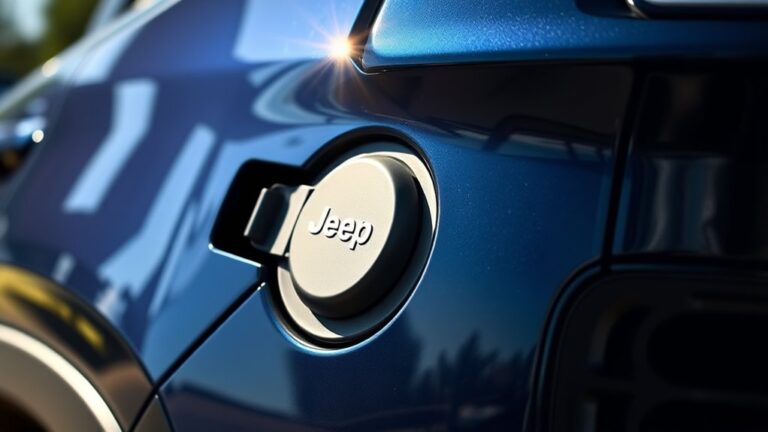
You can also look inside the fuel door or near the driver’s side door jamb for a label. That label usually shows the recommended octane and fuel type.
For even more accurate info, visit Jeep’s website or get in touch with a certified dealership.
Check Owner’s Manual
Your vehicle’s owner’s manual is the most reliable source for finding out the correct fuel type and octane rating for your Jeep Wrangler. It offers official recommendations specific to your model, helping you get the best performance and protect your engine.
You can check the manual stored in your vehicle’s glove box, visit Jeep’s official website, or look at their digital resources. Just look in the fuel section to find the recommended fuel type and octane rating.
Make sure to see if premium fuel or specific ethanol content is needed for your vehicle. Following these guidelines helps keep your warranty valid and ensures your engine stays healthy.
Always refer to the owner’s manual to verify you’re using the right fuel, especially if your Wrangler has a turbocharged engine.
Lookoline Fuel Label
The fuel label on your Wrangler gives you quick and clear guidance on the recommended fuel type and octane rating. To keep your vehicle running smoothly, check this label directly on your fuel filler door or inside the owner’s manual.
Look for the “Fuel Type” or “Octane Rating” section. It tells you whether you need regular, mid-grade, or premium fuel. Many Wranglers with a 3.6L V-6 engine run on regular 87-octane gasoline. Turbocharged or high-performance models may require premium 91+ octane fuel.
Always verify the label before fueling to avoid engine damage or reduced efficiency. Below is a simple guide to understanding the fuel label:
| Vehicle Type | Fuel Type | Octane Rating |
|---|---|---|
| Standard Jeep Wrangler | Regular Gasoline | 87-octane |
| Turbocharged Wrangler | Premium Gasoline | 91+ octane |
| High-performance models | Premium Gasoline | 91+ octane |
The fuel label location is on the fuel filler door or inside the manual. Always check the label before fueling to confirm the specifications and verify the octane rating.
Common Myths About Gasoline and Wranglers
Many myths surround gasoline choices for Jeep Wranglers, leading owners to make unnecessary or mistaken decisions. Some believe all Wranglers need premium fuel, but most models, including the V-6 engine, run efficiently on regular 87-octane gasoline.
A common misconception is that high-octane fuel always boosts performance. In reality, it’s only necessary for certain turbocharged or high-compression engines. Others think ethanol-free fuel is essential for engine health, but standard E10 with up to 15% ethanol is generally fine.
Furthermore, many assume premium fuel cleans the engine better, but all standard fuels contain detergents that keep engines clean. So, premium isn’t always necessary, higher octane doesn’t automatically improve performance, and ethanol-blended fuel is usually acceptable.
What Happens If I Use the Wrong Fuel in My Jeep?
Ever wonder what happens if you accidentally put the wrong fuel in your Jeep? Using the wrong fuel, like unleaded in a high compression engine that needs premium, can cause engine knock, which reduces performance and risks damaging the engine.
Running lower octane fuel than recommended in turbocharged or high-performance engines may lead to knocking, hesitation, and lower fuel efficiency. Consistently using the wrong fuel speeds up engine wear and can even void your warranty.
If you accidentally add diesel to a gasoline engine, it can cause serious damage, including engine failure. The vehicle’s ECU might adjust engine timing to compensate, but this often results in less power and efficiency.
Tips to Save Money While Using the Right Fuel in Your Wrangler
Using the right fuel for your Jeep Wrangler not only protects your engine but also helps you save money in the long run. Sticking to the recommended 87-octane regular unleaded fuel is a smart way to maintain maximum fuel efficiency without unnecessary costs.
Upgrading to premium fuel (91+ octane) is only beneficial for turbocharged or high-performance engines. For standard models, it’s an expense that doesn’t improve performance.
To maximize savings, regularly maintain your vehicle. Keeping tires properly inflated boosts fuel efficiency and saves you money over time.
Also, consider fueling at stations with loyalty programs or discounts to get the best deals at the pump.
Frequently Asked Questions
Can I Put 87 Gas in a Jeep Wrangler?
Yes, you can put 87 octane gas in your Jeep Wrangler. Most models, including the standard 3.6L V-6 engine, are designed to run on regular 87-octane fuel. Using it won’t harm your engine or shorten its lifespan.
However, it’s always a good idea to double-check your owner’s manual to confirm the recommended fuel type for your specific Jeep Wrangler model. Higher-octane fuels are unnecessary unless your manual specifically says so.
Should I Use 87-89 or 91 Gas?
You should use 87 octane gasoline for most Jeep Wranglers, especially if your owner’s manual recommends regular unleaded.
If your Wrangler has a turbocharged engine like the 2.0L, then 91 octane premium fuel is best to optimize performance and prevent knocking.
Using 89 octane is acceptable if your manual doesn’t specify a higher octane, but it may not offer significant benefits over 87 octane.
Can I Put Regular Gas in My Jeep?
Yes, you can put regular gas in your Jeep if it’s designed to handle 87 octane fuel. Most Jeep Wranglers, including the 3.6L V-6 models, are compatible with regular 87-octane gasoline.
However, if you have a turbocharged engine like the 2.0L, using premium might be better for maximum performance. But regular gas will work, though you might notice a slight drop in power.
Always check your owner’s manual to be sure.
What Is the Average Income of a Jeep Owner?
You probably make enough to buy a small island because the average income of a Jeep owner is around $80,000 to $100,000 annually.
This means you’re part of the middle to upper-middle class, with plenty of disposable income for upgrades and adventures. Most owners are in their late 30s to 50s, holding steady careers.
Your income level shows you’re serious about enjoying outdoor freedom and off-road fun.
Conclusion
Choosing the right gas for your Jeep Wrangler guarantees peak performance and longevity. Using the recommended fuel type and octane rating helps you avoid costly damage and keeps your adventures smooth.
Are you ready to fuel your Jeep wisely and get the most out of every drive? Remember, the right fuel isn’t just about saving money. It’s about protecting your investment and enjoying every mile.
So, why settle for less when your Wrangler deserves the best? Using the proper fuel ensures you’re always ready for whatever adventure comes next.